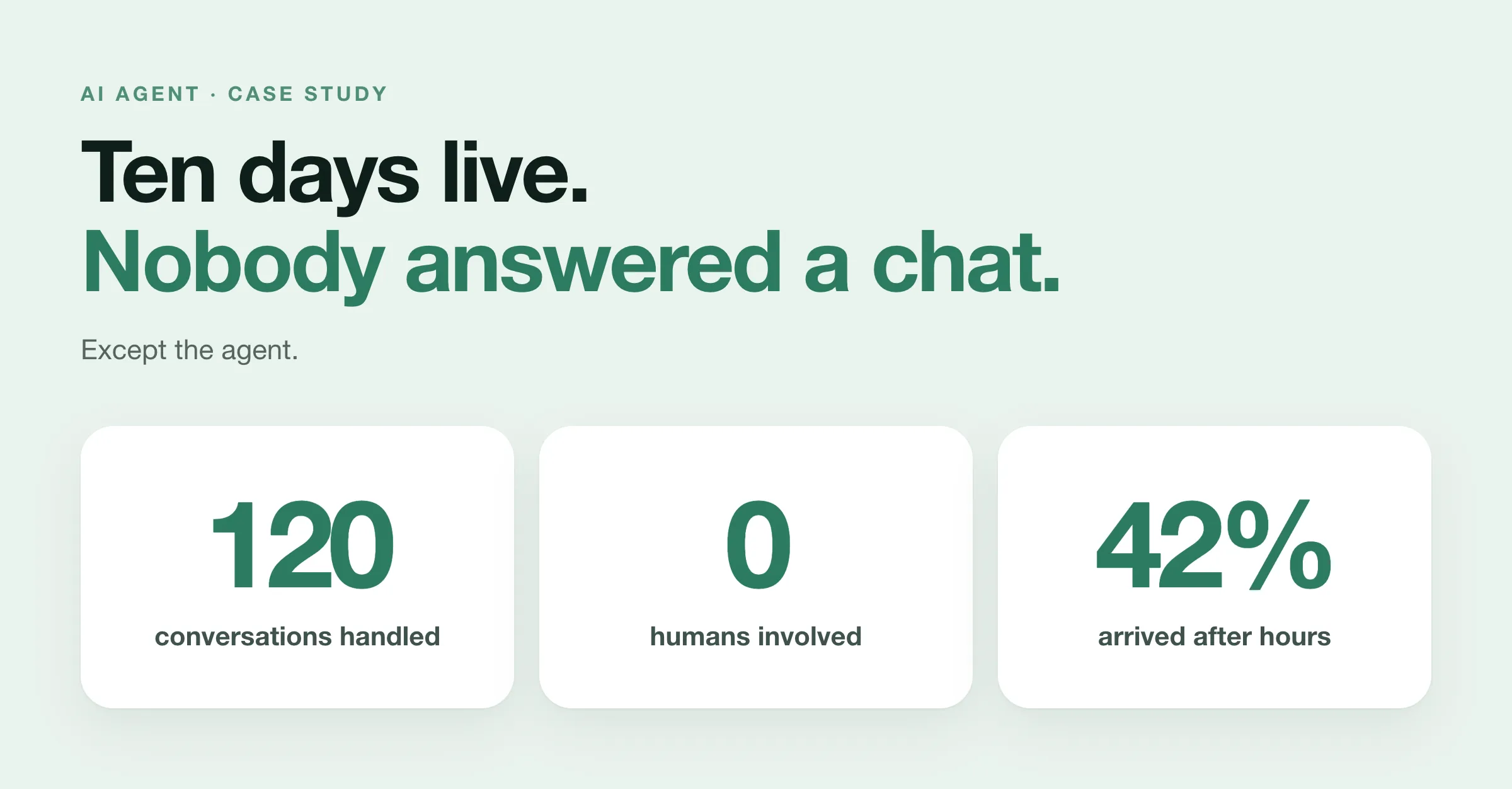
6,092 visitors. 120 conversations. Zero humans.
What actually happened when a paperwork-heavy service business put an AI agent on its website — and what the numbers say about the rest of us.
The setup
A cross-border document services firm. Apostille, legalization, retrieving certificates from foreign archives — the kind of work where every enquiry is a small puzzle: which country, which document, which authority, what deadline, what for.
Nobody buys this on impulse. Every visitor arrives with a question, and answering it honestly takes a specialist 5–15 minutes of clarifying before any quote is possible. A hundred enquiries a month, and you have a qualified person whose full-time job is repeating themselves.
So they put one AI agent on the website. Trained only on the company’s own public service pages, country guides and procedures. Its job was deliberately narrow:
Answer the first question. Work out what the case actually is. File a complete request on the specialist’s desk.
Not close a deal. Not quote a price. Not pretend to be a lawyer.
The numbers
30-day window. Worth knowing: traffic only started on day 20 — everything below happened in about 10 live days.
| Website visitors | 6,092 |
| Conversations handled | 120 |
| Structured leads captured | 120 (100% of conversations) |
| Messages in → out | 277 → 277 |
| Average conversation | 4.6 messages |
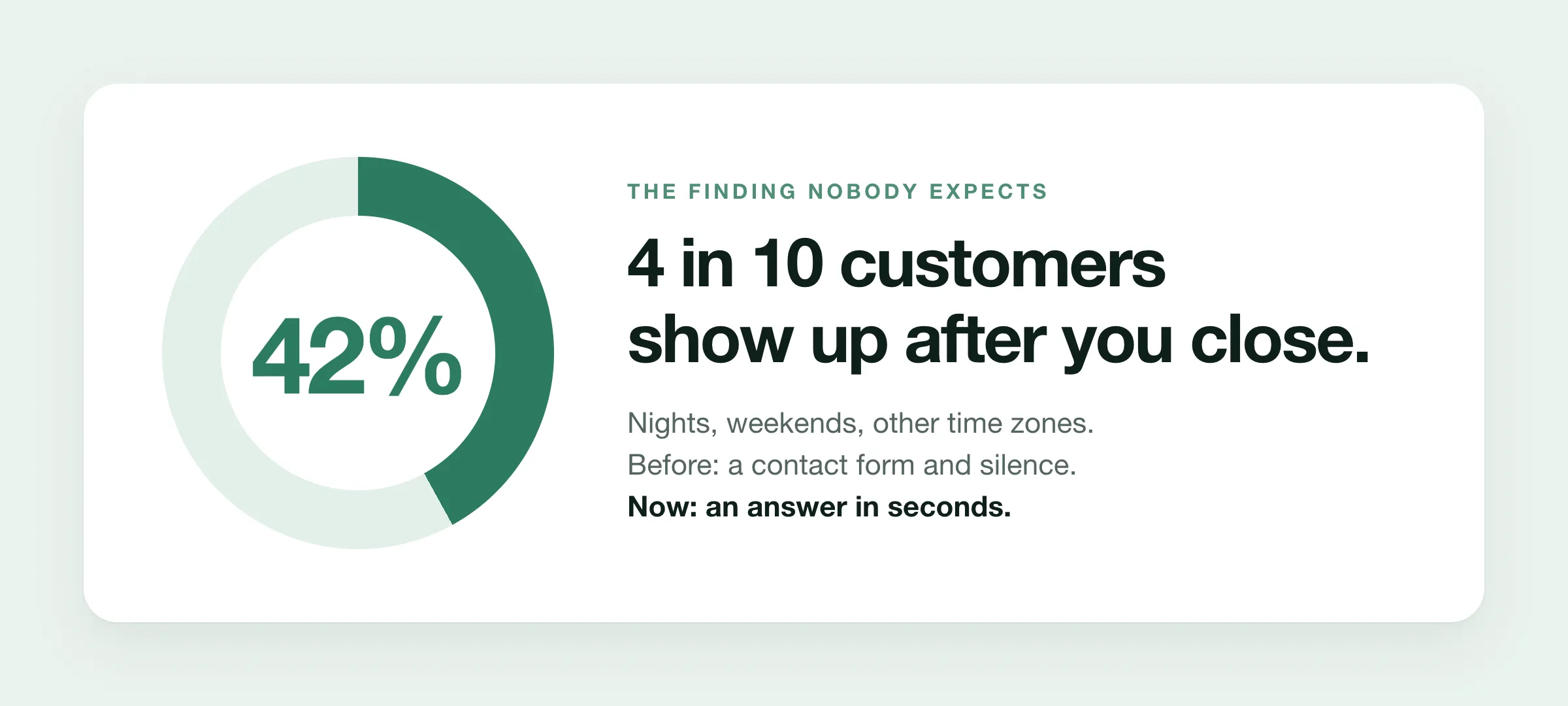
| Started outside working hours | 42% |
| Human handoffs | 0 |
| Specialist time saved | ~16 hours (≈ 2 working days) |
One of those lines is the whole story:
Five things the data actually says
1. Nights and weekends are a real sales channel. 42% of conversations started when the office was closed. Those people weren’t “browsing” — they were asking about deadlines, fees and documents at 11pm. Before the agent, they got a contact form and a silence.
2. The bottleneck was never volume. It was the first five minutes. 4.6 messages per chat, then a decision. That’s ~8 minutes of specialist time per enquiry, gone — 16 hours a month back, without hiring anyone.
3. Every conversation left a record. 120 out of 120 chats produced a structured lead card: what the person needs, which country, which document, what’s already been done. Nobody’s WhatsApp, nobody’s memory. The transcript isn’t the product — the brief is.
4. Zero handoffs is a design decision, not a miracle. The agent never got stuck asking a human for help, because it was never asked to do the human’s job. It answers what’s publicly verifiable, and routes everything case-specific into a form the specialist can act on in one read.
5. Language was free. 98% of visitors wrote in one language, 3% in another. No extra configuration, no second bot, no translation workflow. The agent replies in whatever language it’s addressed in — which for cross-border businesses is a bigger deal than it sounds.
What it looks like from the visitor’s side
Two real conversations — condensed and translated into English.
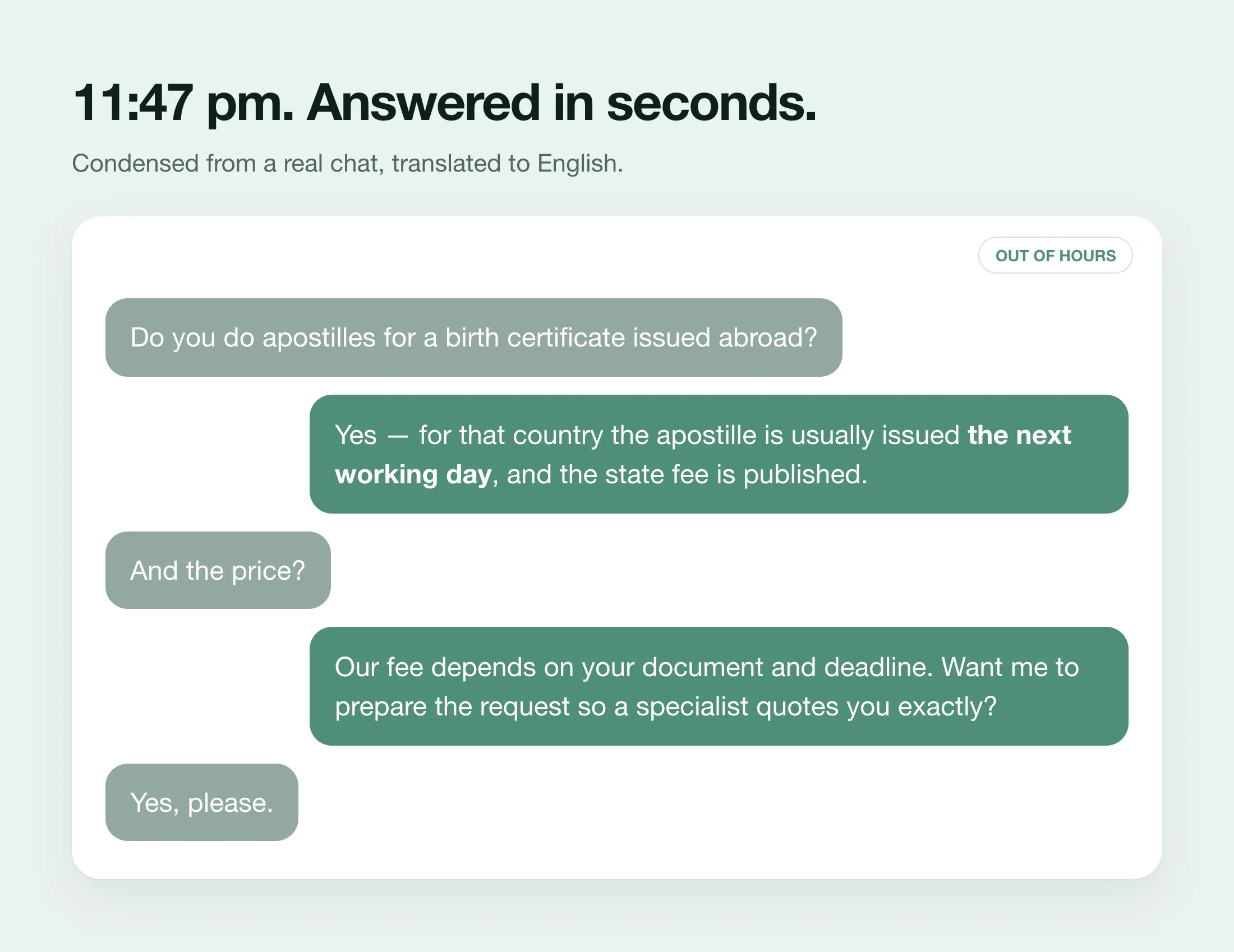
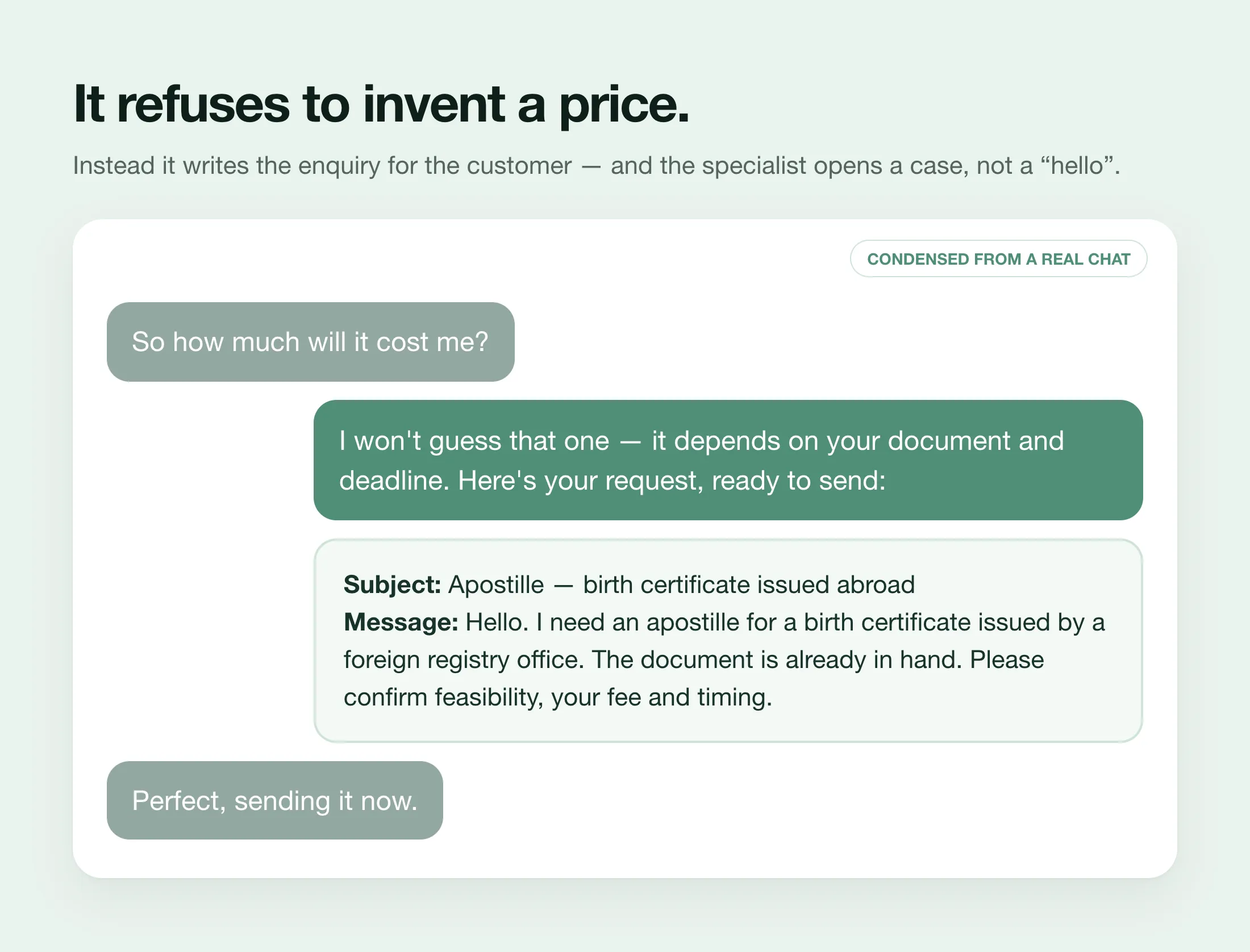
Notice what the agent does not do in the second one: it doesn’t invent a price. It gives the published statutory fee and the standard turnaround, says the rest depends on the case, and then writes the enquiry for the customer. That single move — turning a vague “how much?” into a briefed request — is most of the value.
The part people underestimate: it doesn’t consult, it files the request
Consulting is the easy half. Any decent chatbot can explain what an apostille is.
The half that actually saves money is what happens after the conversation. This agent doesn’t hand the manager a transcript to read — it assembles a request: what the client wants, which document, which country, whether the original is in hand, what’s still unknown, and the scan it told the client to attach.
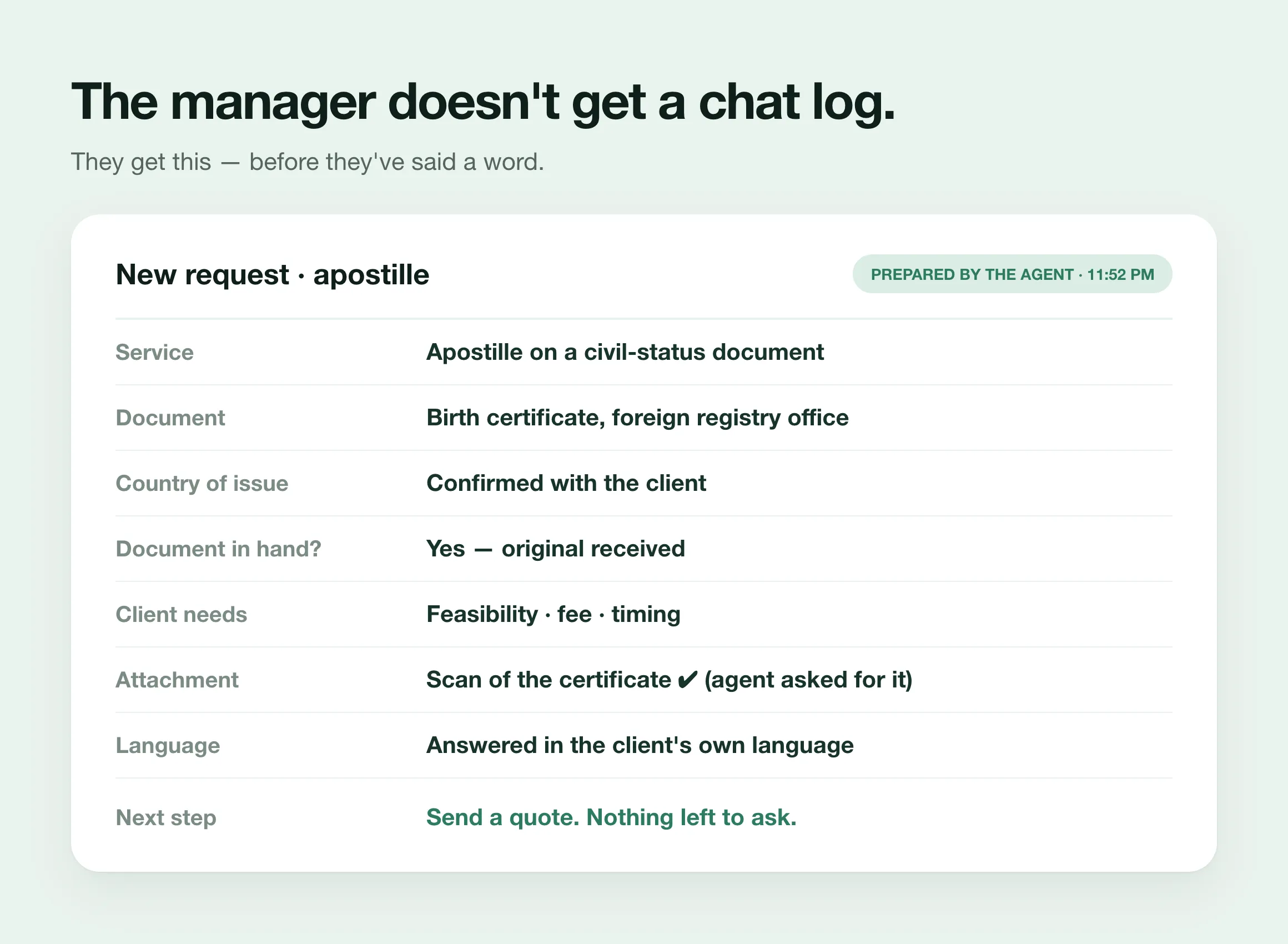
So the manager never enters the conversation. They enter the case.
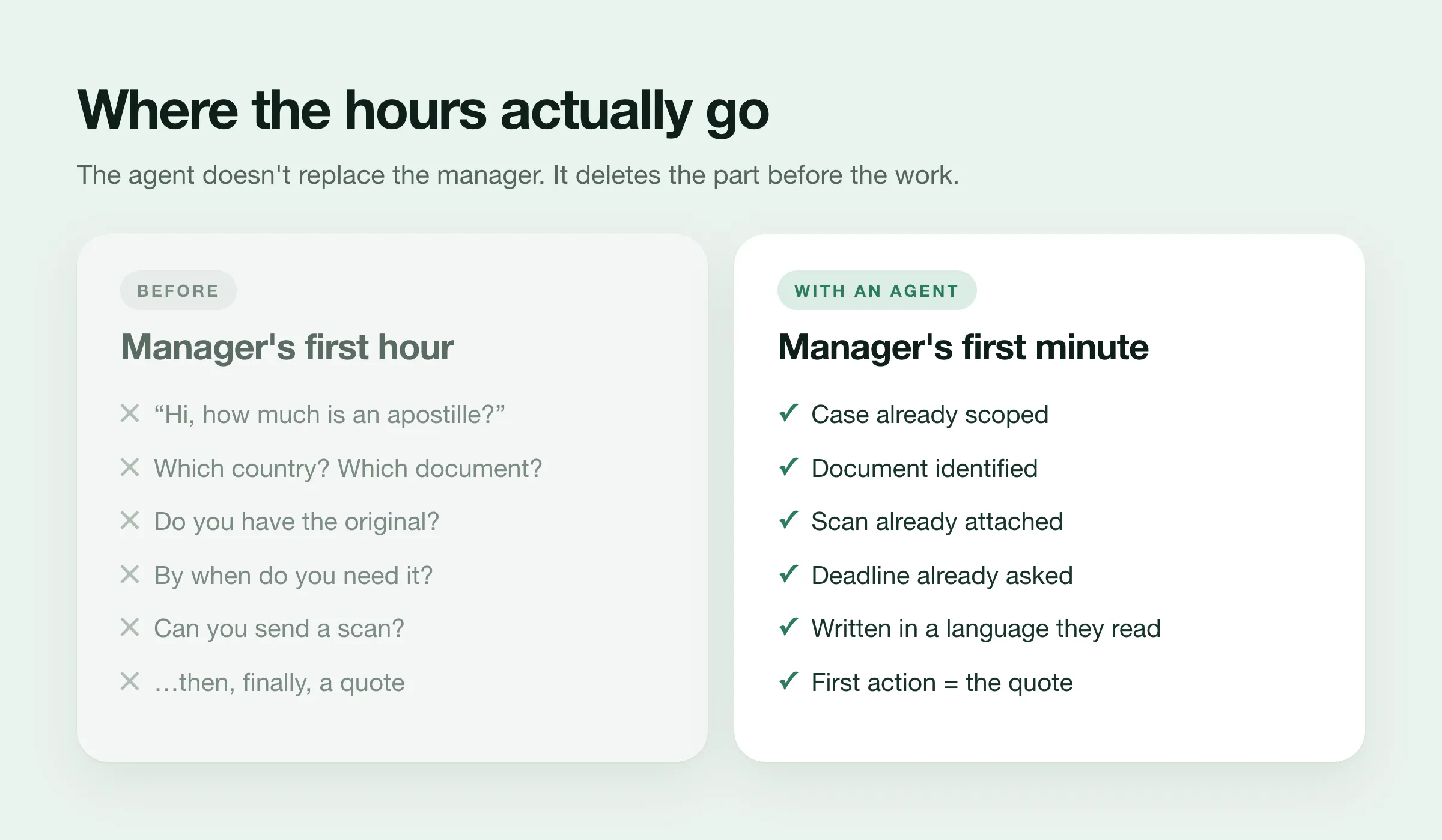
That’s where the 16 hours come from. Not from “the AI answered questions” — from deleting the five-message interrogation that used to happen before any real work could start. The client also wins: they don’t repeat themselves to a second person, and they’re told upfront which document to attach, so the first human reply is an answer instead of another question.
Two details that make this work in practice:
- The agent asks for the attachment. “If you have a copy, attach it to the form.” One sentence, and half the cases arrive complete.
- No CRM integration required to start. The brief can land as a form entry or an email in the shared inbox. Integration is an upgrade, not a prerequisite — the value shows up on day one.
What works great
- First-answer speed, at any hour. No queue, no shift, no “we’ll get back to you.”
- Repetitive expertise. The 20 questions your team answers every week, answered identically and correctly every time.
- A filed request, not a transcript. The specialist opens a case, not a conversation — with the document already attached.
- Multilingual by default. One agent, every market you already get traffic from.
- Cheap to run. This ran entirely on a small, fast model tier — the cost per conversation is cents, not euros.
What it must never do
- Quote custom prices. Anything case-dependent gets routed, not guessed.
- Give legal or procedural advice beyond what the company already publishes.
- Fake being human. It introduces itself as an assistant in the first message. Nobody minded — 120 conversations, 0 complaints, 0 demands for a human.
- Improvise facts. If it isn’t in the company’s own content, the answer is “let’s get a specialist on this,” plus a drafted message.
The rule of thumb: the agent owns the first five minutes, the human owns the deal.
Would this work for your business?
It replicates well when you can tick most of these:
- ~100+ meaningful enquiries a month
- The same first questions, over and over
- Many combinations: country × product/document × purpose × deadline
- A specialist currently burns 5+ minutes qualifying each enquiry
- A single won case is worth more than a month of the agent
- You already publish content that answers most first questions
Document services, immigration and relocation, work-abroad recruitment, medical tourism, education agencies, customs and logistics, cross-border legal and tax — same shape, same math.
The uncomfortable part
Most businesses in this position think their problem is not enough leads. The numbers say otherwise: the traffic was already there — 6,092 people. The problem was the answer that never arrived, for 4 out of 10 of them, because it was after 6pm.
An AI agent doesn’t magically create demand. It stops you from losing the demand you already paid for.
Curious what your own first-five-minutes look like? Send me your website and I’ll tell you which questions an agent could take off your team’s plate — and roughly what it’s costing you now.